




Your video editor can’t read your mind

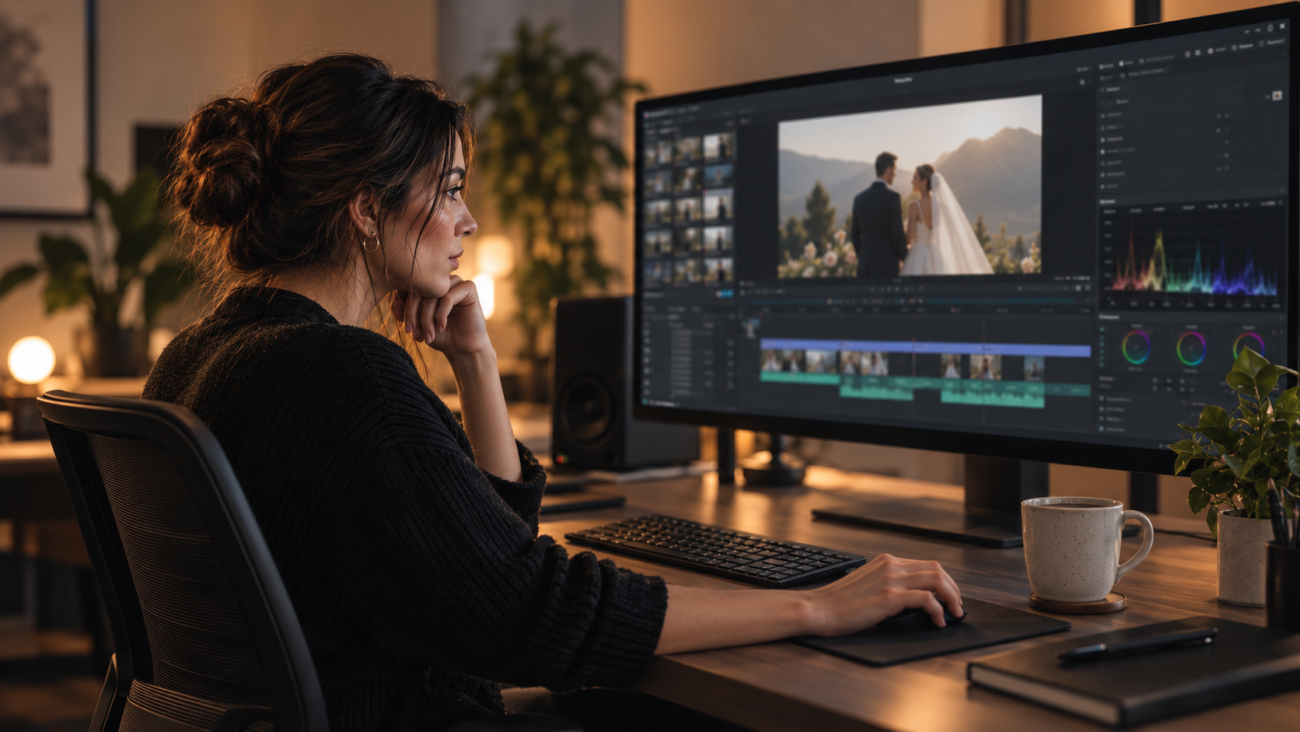
Wanderlust Videos are with us in València this October. They have edited more than 10,000 wedding films in ten years, so we asked them what actually happens when a filmmaker hands an edit to somebody else.
This one’s for the filmmakers.
You’ve spent years building your style. You know when a shot has stayed on screen too long, when a moment needs room to breathe, and when the story needs to move. You know the music that works for you, the shots you reach for, and the perfectly good footage you would never actually use.
You’ve made thousands of those decisions, and almost none of them are written down anywhere. You may not even think about them consciously any more. You just know when something feels like one of your films.
Your editor can’t read your mind. A good editing partner can learn how you think.
Your style is more than your portfolio
Reference films are one of the best places to start. They show an editor how you pace a film, how you use music and dialogue, the shots you choose, and how you approach storytelling. What they can’t do is explain every decision behind what ended up on screen.
Style lives in small creative choices: how sequences get built, which moments make the cut, and which ones don’t. Some of it can be explained upfront. The rest is learned through feedback. And because style keeps moving, a good editing partner keeps learning along with it.
That’s why we spend time at the start of a partnership understanding your work, your preferences and what matters to you creatively. It builds a foundation that gets sharper with every project.
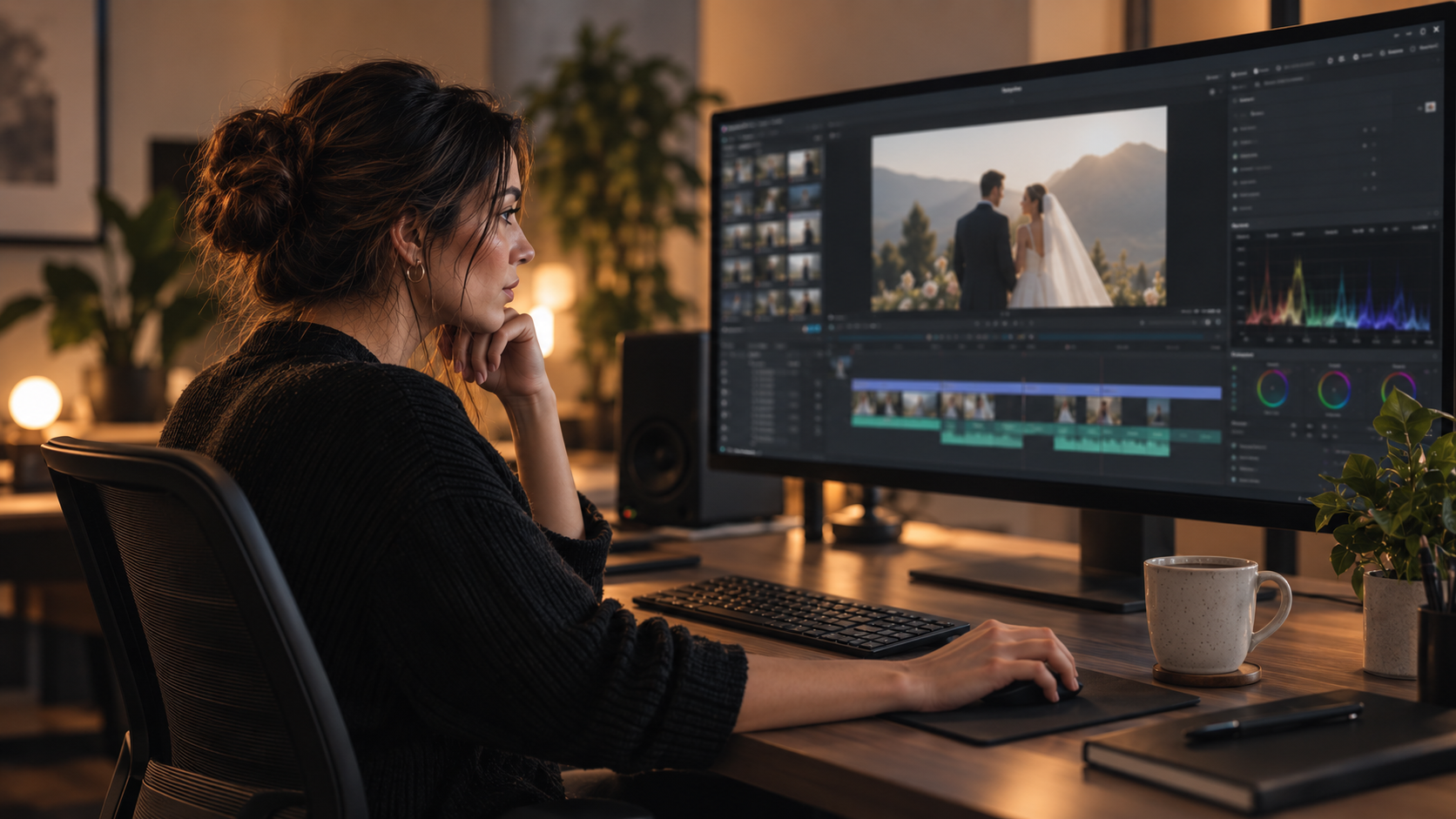
The things a brief can’t tell you
Some preferences only show up through the work. An editor makes a choice, you react to it, and suddenly something you’ve been doing instinctively for years is something you have to put into words for someone else.
One of the filmmakers we work with recently came back to us after some time away. We wanted to recalibrate to where his style was now, so on his first film back we asked him to be especially detailed with his feedback.
He didn’t hold back. More than 50 comments on the first cut. Not 50 things that were wrong – he told us he loved the edit. His notes covered specific changes, choices that worked especially well, and how he thinks about pacing, shot selection and building a sequence.
That was exactly what we wanted.
One comment was about a reception sequence:
On shot variety
“There are a lot of wider angle clips of reception used, I try to vary focal lengths in sequences quite a bit so that it doesn’t look like it’s all from the same or similar vantage point.”
On pace
“Not a huge fan of the overall rapid fire sequence here, please use longer clips.”
On taste
“Not a huge fan of clips like this, the combination of the beer bottles with looking and pointing at the camera is a little bit too ‘silly’ for this music.”
The first one is useful far beyond that revision: the editor now knows how this filmmaker builds a sequence. The second says that building energy doesn’t have to mean cutting faster. The third is taste, and taste is exactly the kind of thing an editor only learns by working with you.
The value wasn’t in the number of revisions. It was in the thinking behind them.
Don’t just tell them what you’d change
Learning someone’s style isn’t only about revisions. Knowing what worked is worth as much as knowing what didn’t.
The same filmmaker left comments like “Love the bride reveal,” “Love this energy here,” and “Love this 3 shot sequence of reception decor.” When you point out the choices you love, you’re telling your editor: this is me, remember it. Over time those moments define your style as much as the things you ask to be changed.
At the end of those 50-odd comments, he explained why he’d gone into so much detail:
Why the detail
“I really love this edit overall! It is incredible and really high energy. I just wanted to provide a lot of detailed feedback so that I can explain how & why I would choose certain edits.”
The feedback wasn’t about getting one film where he wanted it. It was about making sure that knowledge carried forward.
The time you put in upfront should pay you back
There’s an investment at the start of any good editing partnership. Every piece of feedback becomes part of what we know about your style and carry into the next project: how you handle pacing, music, dialogue and shot selection, the things you love, and the things you never want to see again.
You’ll spend longer giving detailed feedback on the first few films. You won’t have to keep giving the same feedback.
Film by film the balance shifts. You spend less time explaining and reviewing, we get more confident making decisions inside your style. The brief gets shorter. The feedback gets lighter. The film lands closer to where you want it on the first pass.
That’s where the saving compounds. You’re not only getting back the hours you would have spent editing. You’re spending less time managing the edit as well. And the editing team stops following instructions and starts making decisions confidently inside your style.
From editor to editing partner
This is why the relationship matters. Your feedback, preferences and creative decisions don’t disappear when a film is finished. They become part of what we know about your work.
Working with so many filmmakers has taught us that there isn’t one right way to edit a wedding film. Every filmmaker tells the story their own way. Our job isn’t to replace that. It’s to learn it.
About Wanderlust Videos
An editing team that learns how you think
Wanderlust Videos is a wedding film post-production studio. Ten years, more than 10,000 films, and a workflow built around learning a filmmaker’s style rather than working from a brief each time.
Hand over everything, or only the films you don’t want to cut yourself. Either way the aim is the same: your films, your name on them, fewer of your hours inside the timeline.
See the work at wanderlust-videos.com.
Wanderlust Videos is a partner of Way Up North València, 13 & 14 October 2026.